Category Archives: Uncategorized

Need vs. Want

Heartweed

Don’t get me wrong; I feel blessed to live in a rich country. My kids don’t have to pick through e-waste to help me buy dinner. And I’ve always been a hard worker, but my body isn’t bent and aged beyond its time in the pursuit of survival. But our culture here in the United States has myriad insidious facets.

We teach our children (who sometimes evolve into adults) to be consumers. Hell, we don’t teach it: it’s present in the very fabric of daily living. Buy, buy, buy. You need a new iPhone, new Jordan’s, a new truck. I don’t let my kids watch commercials (as much as possible) because companies start jamming products in our faces before we can walk (the TV has an “off” button—remember that). They attempt and generally succeed in creating desires for products and services, and through incessant repetition these desires start to feel like necessities.

We need food; we need shelter, and I understand wanting to live in luxury, but I want to remind the three people who read this to stay aware of the little voice dictating to them what they “need”. If you want it, fine, but please don’t tell yourself you need it, because more than likely you don’t.

Due to the preachy nature of this post, I’ll keep it short. I don’t want to tell anyone how to live his or her life, but please try not to get sucked in to the advertising maelstrom of American life. To borrow from Louis C.K., let’s try not to be mindless product sponges, and even more importantly, teach our children not to be. I’ll step down off my soapbox now.

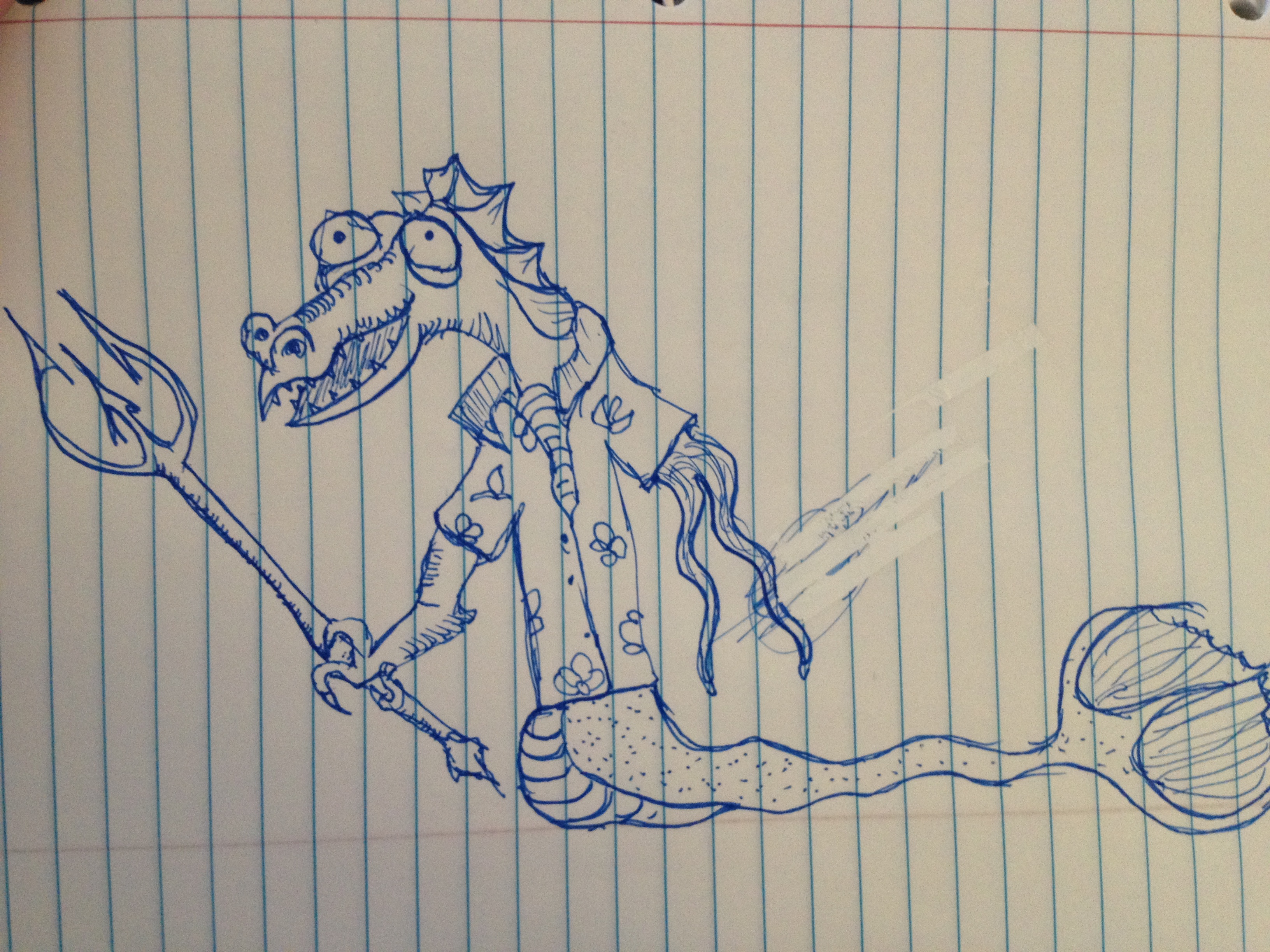
Oh yeah, here’s a picture I drew.


A Haunting from the Garden

pepper

What can I say? Despite my best efforts to evolve as a person, I am still prone to macho behavior and making foolish choices. One such instance occurred recently when a friend of mine told me he was growing ghost peppers.

“Ghost peppers?” I asked. “What are those?”

Because he possesses a meticulous, scientific mind he articulated how ghost peppers contain greater amounts of BTU’s or MRI’s than any other pepper (my head fogs up when numbers and units are involved, but I got the gist: ghost peppers are as hot as they come.)

Now, he didn’t challenge me. He didn’t insinuate I was weak. Yet some vestigial adolescent need to prove myself an invincible tough guy prompted me to say, “I’d eat one of those raw.”

My friend instantly recognized the potential for humor, so instead of saying, “Nah, man, you don’t want to eat that,” he goaded me further by pointing out how my kids and friends would recognize what a superb being I would become should I consume one of Satan’s candies. We briefly discussed tasing me while I ate it, or me dropping acid first, or both, but I quickly decided I wasn’t man enough (read: foolish enough) for all that business.

The pepper grew up—big, red, and angry, and at last the time came to stand behind my hastily spoken words. I bit into that sucker, chewed it for ten seconds, and swallowed. “This is not so bad,” I thought. Then the black magic within the ghost pepper contaminated my tongue. I’ll admit: I panicked for a moment. I couldn’t have previously imagined a spice could be so hot.

Milk and water brought intermittent relief, but really there was no escape. Ghost peppers are conscious-altering hot; if you don’t believe me, try a fresh one. Besides, you’re not really a man until you do.

Here’s a link to the video if you want to see me cry:  http://youtu.be/yCzbpgYj5ZU


That’s the Way that the World Goes ‘Round

Sam's Dragon

John Prine, a song writer and low-key wise man wrote and sings one of my favorite songs (vying in my head for first place with Sound System by Operation Ivy): “That’s the Way that the World Goes ‘Round”. Prine imparts to those who are ready to hear, “That’s the way that the world goes ’round / You’re up one day and the next you’re down / It’s a half an inch of water and you think you’re gonna drown / That’s the way that the world goes ’round”.

When I was younger and believed that the labels headshrinkers applied to me served some function, this song felt like the theme music for my bipolar disorder diagnosis. The doc told me I didn’t have it bad, and luckily I ended up with the kind that manifests its “highs” as anger and irritability. Well, I’m not going to blame a mental “illness” for my problems—truth is I am just not handling business in my precious, boney gourd. Labor is the medicine.

Life is ebb and flow—whether it be the ocean, your personal energy, your good feelings, or your work. I’m not preaching—y’all know this—it’s ubiquitous: ebb and flow, give and receive, create and destroy, on and on in every aspect of existence that I can think of. I endure periodic low times when I find it difficult to work, to be creative, hell even to shower sometimes. I’m generally as pleasant as Dr. Satan during these spells—I feel coated from the inside out with a suffocating, foamy slime of apathy. I feel bad for feeling like this because I am grateful for the numerous blessings I have. What gives me the right to even frown when my home isn’t being bombed by my own government (yet), and my children don’t have to work downwind of a mountain of poisonous industrial waste? Regardless, I feel downright bad—feelings that used to lead to extremely self-destructive behavior before I became a dad.

Just like John Prine states (in accordance with the Tao): sometimes, man, you’re up, and sometimes you’re not. It’s simple, I realize, but it’s the simple stuff I tend to have the most problems with. Someone once told me to be grateful during the good times, and graceful during the bad ones. I don’t need to hold on to my emotions and keep lingering in darkness, and I’m getting better with practice. My son—he’s had a stroke, cancer, brain surgery, infantile spasms, and all before his third birthday. In return he’s got nothing but smiles for the world, and kind words for all (except when scrapping with his brother). I’m the parent, and I am teaching him some stuff, but I swear to Lovecraft he’s teaching me more than ten gurus could. For instance, I drew a dragon wearing a Hawaiian shirt to his specifications and had a GD breakthrough. It’s hard to stay nihilistic when you’re drawing shit like that (and he chose the details as carefully as if we were going to build the sucker next to the Ritz.) Thanks, Sam. I hope any readers who made it this far found something useful amidst this self-indulgence. Maybe you should’ve stopped at the dragon.


Grandpa

crazy eyes

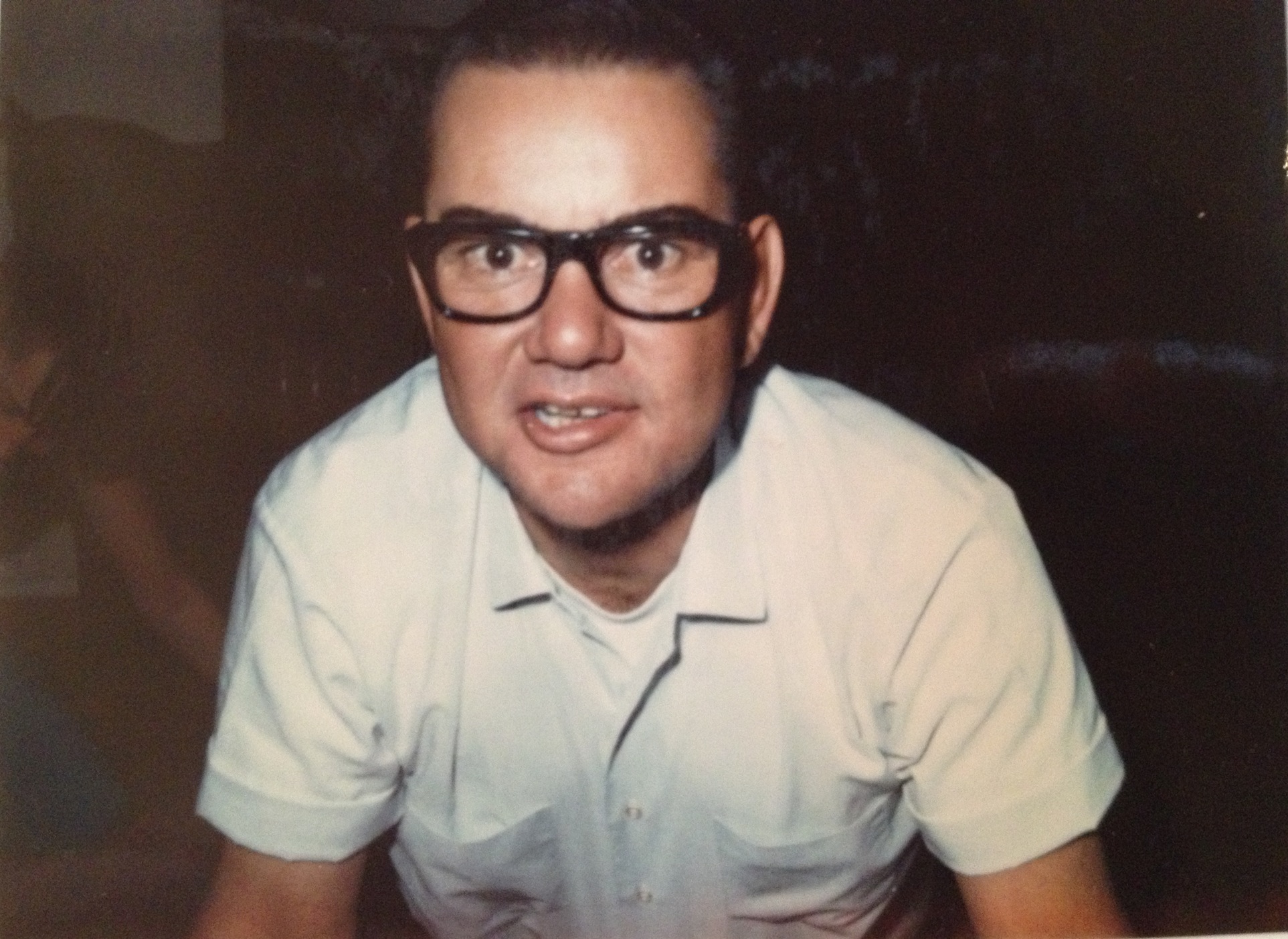
My maternal grandfather was a strange and stubborn chap. Working for the IRS is the only job I’ve ever heard of him having, but I’m sure he started working at an early age. There’s no kid’s lemonade stand for that position (though it is clearly organized in a superior manner to many of our political bodies and branches and stuff that people argue about, which is kind of like arguing about whether you’d rather be bullwhipped with a horsewhip or horsewhipped with a bullwhip.) I am told he was one of the agents that helped put Joe Conforte in prison. He also liked to have a wee nip here and there—like vodka when he woke up (on his days off) through to dinner, followed by Kahlúa, which he inevitably spilled on himself as he nodded off. And stubborn! Oh man! There are drunken boulders with more flexibility.


I spent a good deal of time with my grandparents because my mom was working full-time and finishing her Master’s Degree. My grandfather would let me stay up late and he’d beat me at Chess (sometimes I could pull off a victory if he was cover-one-eye-while-you-drive drunk), or I’d sit and do the things that uncoordinated, awkward only-children do, like draw monsters or read fantasy, while he drank, usually in silence. He’d open up a bit once he was pretty well sauced. He had this catalog of CIA or FBI gadgets, like camera pens and poison napkins, but the real deal, and to a kid, well a boy anyway, that ranks right up there with Chuck Norris (which is awesome—to a kid). I remember him telling me, while I paged through that James Bond SkyMall, never to tell people he was in the IRS. He said everybody hated the IRS, and that I should lie and say he was in the CIA or FBI. At that age (before things like marriage), I didn’t know why anybody would hate anyone not related to them, but I always chuckle a little now when I think about his comment.


In the interest of not filling your time with six pages of details about a person you can’t meet and don’t care about, I’ll illustrate his memorable personality through a quick series of flashbacks:


My mom forced me to take violin lessons, and because my grandpa either thought violins were for sissies or because he was bored, he called my mom every fifteen minutes to tell her to let me quit. Interestingly, my mom didn’t give in, but she did go a little more crazy.


I had a mullet in high school (and a kind of morbidly obese Mohawk later on), and he said he’d call me Jennifer until I cut my long hair. He eventually tired of that name after six months or a year.


I almost punched him in the face once (we were both drunk) because he was chasing me around the house at Christmas with a pair of long scissors, threatening to cut off the suspenders I wore hanging down to my knees, rendering them useless as all high fashion. In retrospect, I should’ve let him.


He was asked by his ultra-religious mother-in-law to say grace at yet another drunken family meal (holidays were a riot, sometimes literally), and in front of twenty or twenty-five people he says something like, “Thanks for the food, Jesus,” but added the F-word to spice up the common noun some. I was young, eight maybe, and although I can barely remember what happened last week, I still recall perfectly the shade of red my great-grandmother (in-law?) produced with her mixture of loathing, disbelief, and indignation before All Mighty God. She might’ve even been a little scared, who knows? No one laughed; it was a gruesomely rude thing to do, almost as rude as expecting someone to suddenly participate in your religion. For the record, I would’ve just said grace, however that goes. I think my uncles all thought it was funny. I know I did.



On Offending a Punk

snake and cross

Have you ever seen something that struck you as funny even though good people would shake their heads and scowl in disgust if they found out you were amused? Like when you see that half-monkey brat kid at Mal-Wart (thanks Adam) fall off the soda display and crack his head? Or when you can barely stifle laughter for two hours during The Passion of the Christ? That happened to me this weekend (after I fell off the soda.)

I play bass in a punk band called 10 Cent Mistake, and Friday night we played a show with Part of the Problem, Out for War, and other Reno punk bands. Though I’ve been thoroughly desensitized to punk music’s shock value, many folks find punk offensive. Not to say that punks embody calm acceptance of the world around them, but they should, at least in my opinion, be inoculated to shocking or offensive phenomena, be they words or images.

So how do you offend a punk rocker? From what I saw Friday it’s not too hard. I won’t go into details and thus betray my insensitivity to the world, but one of the bands said something that directly contrasted what an earlier band had said and next thing you know a couple punks walked out like Jesus freaks at the first screening of The Exorcist. I’ve seen people react many ways to different situations, but I never thought I’d see punks offended by crass language at a punk show. And I have to admit: I thought it was funny as Hell.

Of course, like most people, I’m a bit of a hypocrite. I react poorly to minutiae every day (like people blocking traffic while lining up in the street for a Starbucks fix.) I’m constantly offended by the general lack of consideration people seem to exhibit for one another. And who knows? Maybe if there were a band there soapboxing for prayer in schools I would’ve walked out too.


Angels and Demons and Popcorn

surreal pic

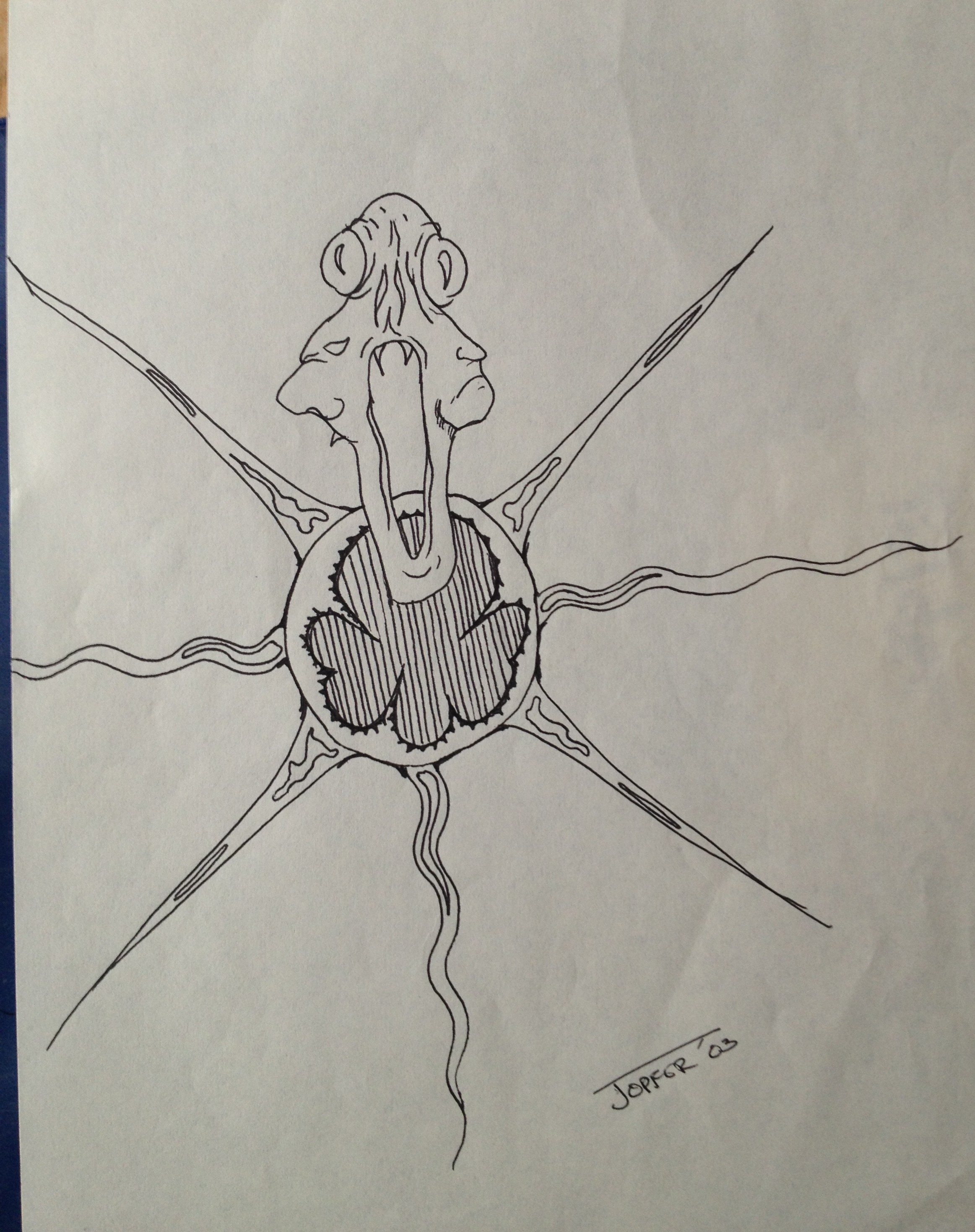
All right, it’s time to come clean: I have a fascination with evil. Gimme horns and hooves, brother! Since I was a child, I have loved all things leather-winged and fanged and seeking to destroy mankind. I don’t feel there’s anything wrong with my appreciation for the demonic form because I recognize that stuff doesn’t exist. At least I’ve never seen it. Sober anyway. It was this devil-love that initially drew me to the documentary Wake Up.

Suggested to me by Netflix, this movie is about a man named Jonas Elrod, who, after his good friend’s death, begins seeing spirits, angels, and demons. While it was the promise of demons that piqued my interest, the evil in this documentary was lacking (except for a great scene with a spiritual photographer.) Despite this diabolic deficiency, it is an excellent film. I have been reeled in by faux-documentaries before (like Street Thief, another great film), so I was quick to check via the Internet if this is a work of fiction. It appears to be non-fiction, although falling into that same gray area as religion: one man’s non-fiction is another man’s fiction.

Jonas seems genuine enough, though I have no way of knowing for sure. What really struck me about the film, though, was the ending. Jonas travels to Washington to partake in a Native American vision quest. Throughout the film, Jonas is clearly searching (or at least pretending to search) for reasons why he can see what others cannot. He clearly doesn’t like discussing the phenomena, and these experiences create strife between him and his girlfriend. But after four days in the forest without food or water, Jonas looks happy, at ease. Smiling, he speaks my favorite line in the film, “I haven’t gone insane; I’ve gone sane.” He says during his vision quest, while focusing on the concept of god, he experienced a voice telling him, “All pointers point in the same direction.” He then saw a big-top tent, empty and collapsing, which he interpreted as religion.

Real or not, I think the ending delivers an important message: the divine so often exists outside of religion. Religion, in fact, may start one on the path, but just as often obscures reality with unnecessary details. Obscuring details might not matter anyway, if there’s only one place to end up after all. I guess we’ll have to wait and see. Whatever your stance on religion and demons and aliens, watching this film will be time well spent.


Have You Heard the Good News?

rbh hoot

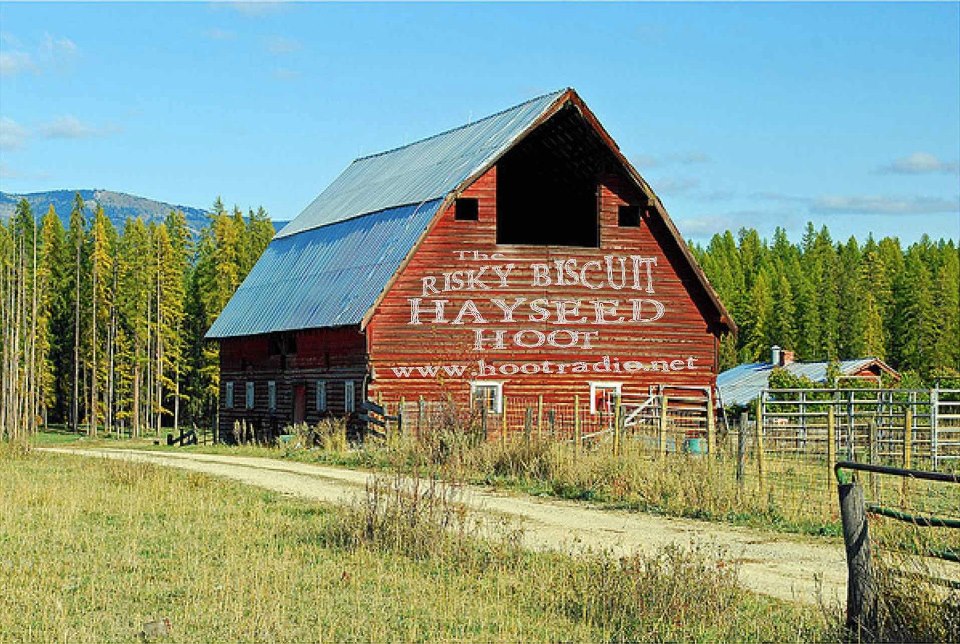
I considered writing about cops today, but in the interest of keeping things light-hearted around here (because I’m sure you can depress yourself another way) I’d like to tell you the good news. Have you taken the Hoot into your heart? Have you tasted the Risky Biscuit sacrament? If not, it’s time you listen to the Risky Biscuit Hayseed Hoot. Can I get an amen? Because I ran out yesterday.


            Now, I’m not usually prone to such religious fervor without the aid of acid, but the Hoot has nursed and rebuked me through many a hangover and wide-eyed, shutter-peeking morning. Outlaw country and bluegrass delivered faithfully by the Honorable Hayseed Don has repeatedly spoken to me, letting me know in my lowest times that I am not alone. Songs with lyrics like “rock bottom / population: 1” and “I say when I drink / what I think when I’m sober” are a salve to a puking fool who can’t remember yet what he’s going to regret.


            A good friend of mine turned me on to the Hoot over twenty years ago. At that time I was addicted to Slayer, Sepultura, and The Doors. I foolishly thought country music was for the kids spitting chew into the heaters at school and driving around in expensive, jacked-up trucks. As usual, I was terribly mistaken.


            I’ve listened to this radio show every Saturday I could, and I listened to some of it today. Do yourself a favor, even if you think you don’t like banjos: tune in to 88.7 FM (if you’re from around here) at 11 am (if you can get to the radio without getting the spins) and give the Hoot a listen. Really listen—for a while—like you would to a crazy guy talking to you on the bus, or writing you a blog.


On Nicknames

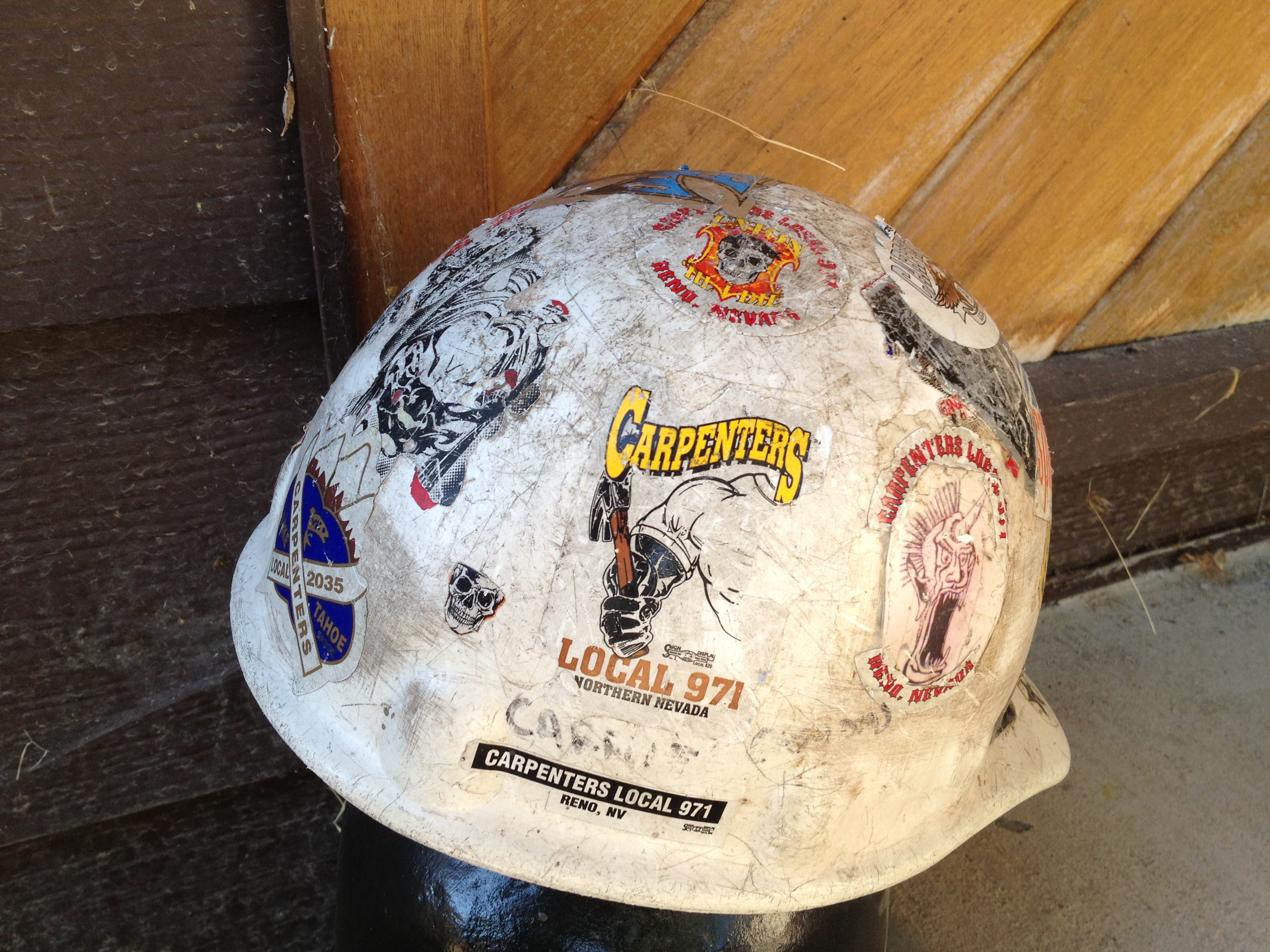
HArd HAt

Ah, nicknames—a good nickname is one that suits the recipient, one that clings to him or her like a newlywed, and ideally, one that he or she loathes. When I was in high school, one witty chap dubbed me “Death” my sophomore year due to my propensity for dressing all in black and a painful shyness that rendered me as quiet as, well, death. He wasn’t a bad fellow, and I eventually opened up to him enough that he changed my name to “Satan” the following year.


I figured when I left the awkward, sleepy years of high school behind, I would leave the mischievous monikers behind as well. I did not know it at the time, but carpenters (one of which I would later become) have a great affinity for—nay, obsession with—bestowing unwanted appellations upon people. An apprentice at twenty-four, I felt like a kid who was forced to repeat sixth grade until he received his driver’s license. All around me were people descended from long lines of builders, born into the trade, who had probably built themselves cribs to sleep in. I didn’t learn how to properly swing a hammer until the start of my third decade. Let the awkward years begin anew.


A carpenter’s apprentice (a lucky one like me anyway) is cheaper to employ than a union laborer. Sweeping gypsum up off concrete—concrete you helped form and pour six months before—while wearing hand-me-down Bob Vila bags turned around backwards is frankly embarrassing, especially when you’re not a teenager. The laborer foreman on one job, probably due to some personal inadequacy, had a special dislike of apprentice carpenters. One friend of mine with a loping walk was quickly dubbed “Jar Jar” (as in “Binks”). And me you ask? The near-ancient-for-an-apprentice carpenter? I was called “Cherry”. Unlike “Jar Jar”, “Cherry” stuck like a nail in a foot. Every GD place I went on that huge jobsite I heard something like “What’s up, Cherry?” or “How’s it hangin’, Cherry?”


After I had gained some respect from the boss, he decided to overrule the laborer foreman and give me a new name. He could not abandon the “ch” sound when he talked to me—perhaps he was not the, ah, sharpest tool in the Connex—so he renamed me “Chuck”. To his delight, I’m sure, every morning he (and others) could then greet me with, “What’s up, Chuck?”


A Light in the Darkness

Sword Draw

I’ve never liked churches. That’s not true—I actually like empty churches—but the ones full of people tend to have surprising and oft unpleasant effects on me. For example, I once went to a church service lead by a guest speaker who painted angels and spoke of forgiveness. I sat in the back row, probably dressed all in black, and cried through the whole thing: I felt like she had read my mind and decided to tear down my emotional defenses in order to do some repairs on my heart. Remember now, I’m a skeptic—I don’t pretend to know about angels and I don’t know what was going on in the back row that day, but I swear on a stack of dictionaries it was powerful. And unpleasant.


The closest thing I have to religion is martial arts. The study of them, jujitsu in particular, is sacred to me. I started young; I was uncoordinated and scared and thought Chuck Norris movies were unrivaled masterpieces. In my eight-year-old mind there existed no cooler entities than the Hollywood ninja. I wanted very much to be a ninja (I’ve also wanted to be a shaman, a vampire, and a cult leader—that’s why I finally settled on writer). I even lied about studying martial arts until I was at last able to take classes.


Hard practice with people who became my family slowly beat enough awareness in me that I realized becoming a badass was the goal of training like jumping down a well is the goal of getting a drink of water. Daily hard training as a teenager helped me deal with depression and rage in constructive ways. I learned to be compassionate, to be polite, and to never, ever give up. I learned that intention has weight in the physical world. I learned the importance of love—even for myself.


The other night we were practicing Maki Komi—a basic throw using the arm while dropping to one knee in a spiraling motion. Throw after throw, impact after impact exorcised the demons of anxiety and preoccupation from me until, for a moment, I was empty and at complete peace. I’m not going to waste words trying to explain the unexplainable, but it was as sacred a moment as any in church. Outside it was raining hard, and then the power cut out. Even though we finished the class in the dark, everything was clearly illuminated for me.


Raising Hooligans 101

hooligans

I have joint custody of two boys, one of whom is disabled due to a stroke at birth that caused significant brain damage. Sometimes the line blurs between who cares for whom because having these children literally saved my life. More on that in later posts.


The older brother is the disabled one, while the younger one is quite advanced (he just turned five and was pointing out examples of sarcasm in a cartoon the other day.) As you might imagine, the dynamics of this relationship can be, well, challenging at times.


For one, the younger brother acts as the older brother even though he’s smaller: he usually wins in fights, enforces some rules with the elder, and discounts the older one’s wild tales to explain what really went down. The older brother mimics the younger one and wants to engage in games created by him. They are at vastly different physical levels, so a trip to the park often ends with the older one exhausted and crying before the younger one can even break a sweat.


Now, I am only one parent (when I haven them), and while I am fortunate enough to have an involved family, the responsibility to raise them (when I have them) is mine alone. I often feel bad that I can only teach one of them my beloved jujitsu; the other simply is not ready. I try to divide my attention and time equally between them, but as any parent with multiple children of varying needs knows, this can be a challenge. For instance, I don’t want to drag my eldest along on an endeavor that becomes increasingly nightmarish for him due to his limitations, nor do I want to rob my youngest of the full experience when he’s not even close to tired or ready to leave.


I try to integrate their play with some success, but their needs and abilities are so mismatched that they often have trouble engaging in lasting play. I’m not a total failure at this: we do nearly everything together and they are becoming better playmates. They often tell jokes I can’t understand but that send them into sidesplitting bouts of laughter—you know the kind: where it looks like laughs are coming out, but the person is completely silent and red-faced.


I guess I’ll do what I always do: refuse to give up no matter what happens and keep plugging along with the confidence that things will get easier and that these experiences will offer all three of us opportunities for growth that will prove to be invaluable beyond what we could ever predict.